
Chinese Architecture and Landscape
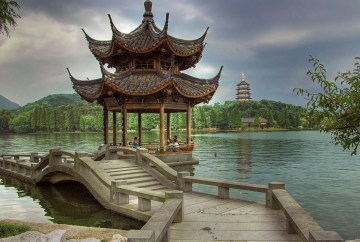
Hangzhou
Hangzhou (Chinese: 杭州; Hangzhounese pronunciation: [ɦɑ̃.tse], Standard Mandarin pronunciation: [xǎŋ.ʈʂóu] (About this soundlisten)), also romanized as Hangchow, is the capital and most populous city of Zhejiang Province in East China. It sits at the head of Hangzhou Bay, which separates Shanghai and Ningbo. Hangzhou grew to prominence as the southern terminus of the Grand Canal … Continue reading Hangzhou
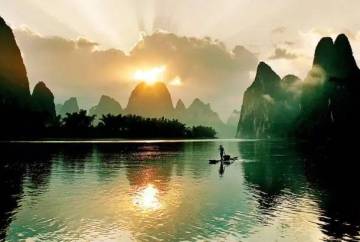
Guilin
Guilin, formerly romanized as Kweilin, is a prefecture-level city in the northeast of China’s Guangxi Zhuang Autonomous Region. It is situated on the west bank of the Li River and borders Hunan to the north. Its name means “Forest of Sweet Osmanthus”, owing to the large number of fragrant sweet osmanthus trees located in the … Continue reading Guilin

Huangshan
Huangshan (Chinese: 黄山), is a mountain range in southern Anhui province in eastern China. Vegetation on the range is thickest below 1,100 meters (3,600 ft), with trees growing up to the treeline at 1,800 meters (5,900 ft). The area is well known for its scenery, sunsets, peculiarly-shaped granite peaks, Huangshan pine trees, hot springs, winter … Continue reading Huangshan

China Water Towns
China water towns mostly are located in east China region, which is traditionally regarded as Jiangnan, a poetic and classic region highlighted with the traditional elite culture and folk culture. Jiangnan water towns may be easier to be understood as East China water town in line with viewing a standard Chinese map, and in this … Continue reading China Water Towns
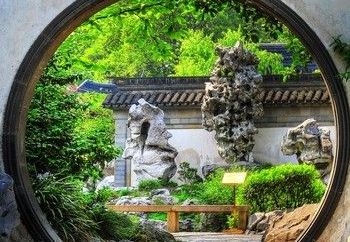
The Classical Gardens of Suzhou
The Classical Gardens of Suzhou are a group of gardens in Suzhou region, Jiangsu province which have been added to the UNESCO World Heritage List. Spanning a period of almost one thousand years, from the Northern Song to the late Qing dynasties (11th-19th century), these gardens, most of them built by scholars, standardized many of … Continue reading The Classical Gardens of Suzhou

The Three Gorges on the Yangtze River
The Three Gorges are world famous as the most scenic section of the navigable reaches of the Yangtze, and the location of the Three Gorges Dam. They form a series of natural and cultural attractions on a Yangtze Cruise between Chongqing and Yichang on the middle reaches of the Yangtze. Qutang Gorge Qutang (/chyoo-tung/ ‘Qu … Continue reading The Three Gorges on the Yangtze River
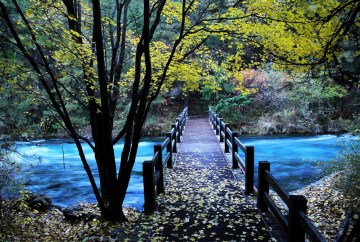
Jiuzhaigou
Jiuzhaigou (pronounced pinyin: jiǔzhài gōu; [tɕjòuʈʂâikóu]; Chinese: 九寨沟; literally: “Valley of Nine Fortified Villages”; Tibetan: གཟི་རྩ་སྡེ་དགུ།, ZYPY: Sirza Degu) is a nature reserve and national park located in the north of Sichuan province, China. Jiuzhaigou Valley is part of the Min Mountains on the edge of the Tibetan Plateau and stretches over 72,000 hectares (180,000 … Continue reading Jiuzhaigou
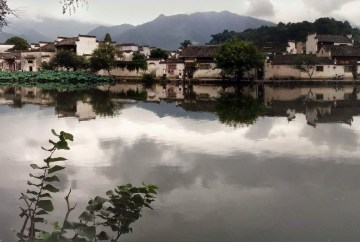
Hongcun
Hongcun (Chinese: 宏村; pinyin: Hóngcūn, lit. “Hong village”) is a village in Yi County in the historical Huizhou region of southern Anhui Province, China, near the southwest slope of Mount Huangshan. The village is arranged in the shape of an ox with the nearby hill (Leigang Hill) interpreted as the head, and two trees standing … Continue reading Hongcun
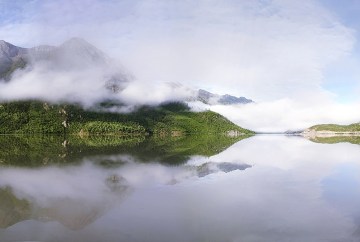
Tibet
Tibet (Listeni/tɪˈbɛt/; Tibetan: བོད་, Wylie: bod, Tibetan Pinyin: boew, pronounced [pøː˩˧˨]; Chinese: 西藏; pinyin: Xīzàng /ɕi⁵⁵ t͡sɑŋ⁵¹/) is a region spanning about 2.4 million km2 and nearly a quarter of China’s territory. It is the traditional homeland of the Tibetan people as well as some other ethnic groups such as Monpa, Qiang, and Lhoba peoples … Continue reading Tibet

Meili Xue Shan
Meili Xue Shan (Chinese 梅里雪山, translation: “Mainri snowy range”) or Mainri Snow Mountain (Tibetan: སྨན་རི།) is a mountain range in the Chinese province of Yunnan. It lies close to the northwestern boundary of the province and is bounded by the Salween River on the west and the Mekong on the east. The Meili are subrange … Continue reading Meili Xue Shan
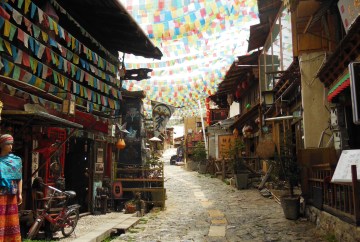
Shangri-La
Shangri-La is a fictional place described in the 1933 novel Lost Horizon by British author James Hilton. Hilton describes Shangri-La as a mystical, harmonious valley, gently guided from a lamasery, enclosed in the western end of the Kunlun Mountains. Shangri-La has become synonymous with any earthly paradise, and particularly a mythical Himalayan utopia – a … Continue reading Shangri-La

Shanghai
Shanghai is the most populous city proper in the world, with a population of more than 24 million as of 2014. As one of the four direct-controlled municipalities of China, it is a global financial centre and transport hub, with the world’s busiest container port. Located in the Yangtze River Delta in East China, Shanghai … Continue reading Shanghai
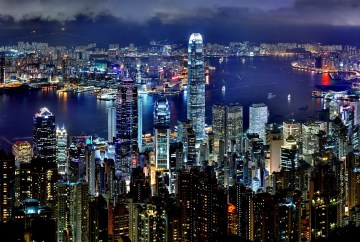
Hong Kong
Hong Kong (Chinese: 香港; pronunciation in Hong Kong Cantonese: [hœ́ːŋ.kɔ̌ːŋ]; literally: “Fragrant Harbour” or “Incense Harbour”), officially the Hong Kong Special Administrative Region of the People’s Republic of China, is an autonomous territory on the Pearl River Delta of East Asia.[15] Macau lies across the delta to the west, and the Chinese province of Guangdong … Continue reading Hong Kong

Ancient Chinese Architecture
Together with European and Arabian architecture, ancient Chinese architecture is an important component of the world architectural system. During its long development, it gradually formed into a style which featured timberwork combining stone carving, rammed earth construction, bucket arch buildings and many other techniques. Industrious Chinese laboring people created many architectural miracles such as the … Continue reading Ancient Chinese Architecture
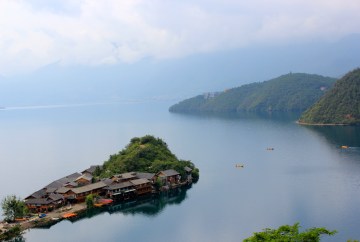
Lugu Lake
Lugu Lake (Chinese: 泸沽湖; Pinyin: Lúgū Hú) is located in the North West Yunnan plateau in the centre of Ninglang Yi Autonomous County in the People’s Republic of China. The middle of the lake forms the border between the Ninglang County of Yunnan Province and the Yanyuan County of Sichuan province. The formation of the … Continue reading Lugu Lake

Zhangjiajie
Zhangjiajie (simplified Chinese: 张家界; traditional Chinese: 張家界; pinyin: Zhāngjiājiè) is a prefecture-level city in the northwestern part of Hunan province, People’s Republic of China. It comprises the district of Yongding, Wulingyuan and counties of Cili and Sangzhi. Within it is located Wulingyuan Scenic Area which was designated a UNESCO World Heritage Site in 1992 as … Continue reading Zhangjiajie
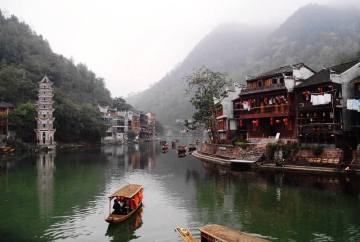
Phoenix Ancient Town (Fenghuang)
‘Fenghuang’ is Chinese for ‘Phoenix’, the mythical bird of good omen and longevity that is consumed by fire to be re-born again from the flames. Phoenix Ancient Town is so called as legend has it that two of these fabulous birds flew over it and found the town so beautiful that they hovered there, reluctant … Continue reading Phoenix Ancient Town (Fenghuang)

Lijiang
Lijiang is a perfect combination of historical sites, snow-capped mountains, lakes, and ethnic minority cultures. It is famed worldwide for its UNESCO Heritage Site, the Old Town of Lijiang, which dates back to over 800 years ago. Where Lijiang Is Lijiang is located in the northwest of Yunnan Province, Southwest China. It is about 500 … Continue reading Lijiang
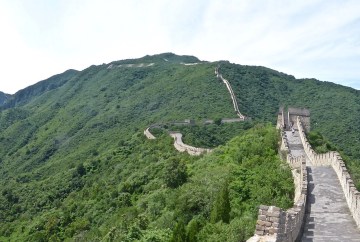
Great Wall of China
The Great Wall of China is a series of fortifications made of stone, brick, tamped earth, wood, and other materials, generally built along an east-to-west line across the historical northern borders of China to protect the Chinese states and empires against the raids and invasions of the various nomadic groups of the Eurasian Steppe with … Continue reading Great Wall of China
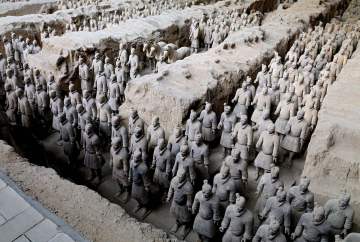
Terracotta Army
The Terracotta Army is a collection of terracotta sculptures depicting the armies of Qin Shi Huang, the first Emperor of China. It is a form of funerary art buried with the emperor in 210–209 BCE and whose purpose was to protect the emperor in his afterlife. The figures, dating from approximately the late third century … Continue reading Terracotta Army

Harbin
Harbin (Manchu: ᡥᠠᠯᠪᡳᠨ (Harbin-manchu.png); Chinese: 哈尔滨 About this soundHā’ěrbīn) is a sub-provincial city and the provincial capital of Heilongjiang province, People’s Republic of China, as well as the second largest city by urban population and largest city by metropolitan population (urban and rural together) in Northeast China. Harbin has direct jurisdiction over nine metropolitan districts, … Continue reading Harbin
 DAVID
DAVID 