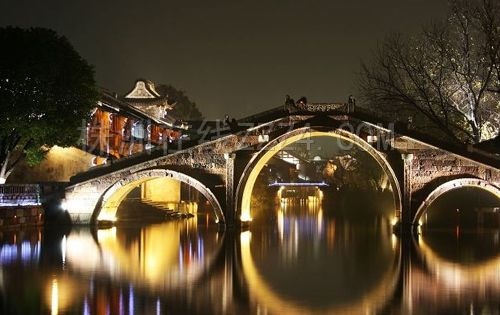
Chinese Culture
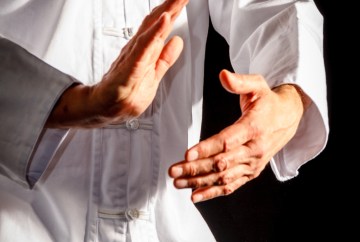
Tai Chi
Tai chi (Chinese: 太極; pinyin: Tàijí), short for T’ai chi ch’üan or Tàijí quán (太極拳), is an internal Chinese martial art practiced for both its defense training, its health benefits and meditation. The term taiji is a Chinese cosmological concept for the flux of yin and yang, and ‘quan’ means fist. So etymologically, Taijiquan is … Continue reading Tai Chi
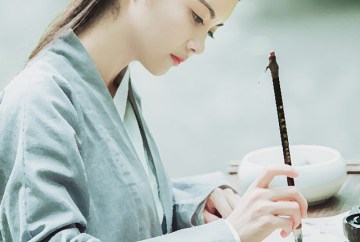
Chinese Characters
Chinese characters are logograms used in the writing of Chinese and some other Asian languages. In Standard Chinese, and sometimes also in English, they are called hànzì (simplified Chinese: 汉字; traditional Chinese: 漢字).They have been adapted to write a number of other languages including: Japanese, where they are known as kanji, Korean, where they are … Continue reading Chinese Characters
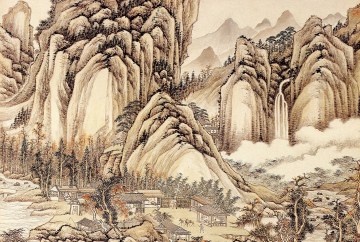
Chinese Painting
Chinese painting is one of the oldest continuous artistic traditions in the world. Painting in the traditional style is known today in Chinese as guóhuà (simplified Chinese: 国画; traditional Chinese: 國畫), meaning “national” or “native painting”, as opposed to Western styles of art which became popular in China in the 20th century. Traditional painting involves … Continue reading Chinese Painting

Panda
The giant panda (Ailuropoda melanoleuca, literally “black and white cat-foot”; Chinese: 大熊猫; pinyin: dà xióng māo, literally “big bear cat”), also known as panda bear or simply panda, is a bear native to south central China. It is easily recognized by the large, distinctive black patches around its eyes, over the ears, and across its … Continue reading Panda

Chinese Dragon
Chinese dragons are legendary creatures in Chinese mythology and Chinese folklore. The dragons have many animal-like forms such as turtles, fish, and imaginary, but they are most commonly depicted as snake-like with four legs. Chinese dragons traditionally symbolize potent and auspicious powers, particularly control over water, rainfall, typhoons, and floods. The dragon is also a … Continue reading Chinese Dragon

Chinese Ceramics
Chinese ceramics show a continuous development since pre-dynastic times and are one of the most significant forms of Chinese art and ceramics globally. The first pottery was made during the Palaeolithic era. Chinese ceramics range from construction materials such as bricks and tiles, to hand-built pottery vessels fired in bonfires or kilns, to the sophisticated … Continue reading Chinese Ceramics

Traditional Chinese medicine
Traditional Chinese medicine (TCM; simplified Chinese: 中医; traditional Chinese: 中醫; pinyin: Zhōngyī) is a style of traditional medicine informed by modern medicine but built on a foundation of more than 2,500 years of Chinese medical practice that includes various forms of herbal medicine, acupuncture, massage (tui na), exercise (qigong), and dietary therapy.[1] It is primarily … Continue reading Traditional Chinese medicine

The Chinese animal zodiac
The Chinese animal zodiac, or shengxiao (/shnng-sshyaoww/ ‘born resembling’), is a repeating cycle of 12 years, with each year being represented by an animal and its reputed attributes. Traditionally these zodiac animals were used to date the years. In order, the 12 animals are: Rat, Ox, Tiger, Rabbit, Dragon, Snake, Horse, Goat, Monkey, Rooster, Dog, … Continue reading The Chinese animal zodiac
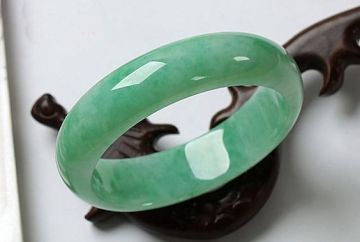
Chinese jade culture
Jade is a metamorphic rock that is naturally colored green, red, yellow, or white. When it polished and treated, the vibrant colors of jade can be extraordinary. The most popular kind of jade in Chinese culture is green jade, which has an emerald hue. Called 玉 (yù) in Chinese, jade is very important in Chinese … Continue reading Chinese jade culture

Chinese Knotting
Chinese knotting (Chinese: 中国结; pinyin: Zhōngguó jié) is a decorative handicraft art that began as a form of Chinese folk art in the Tang and Song Dynasty (960-1279 CE) in China. It was later popularized in the Ming). The art is also referred to as “Chinese traditional decorative knots”. In other cultures, it is known … Continue reading Chinese Knotting
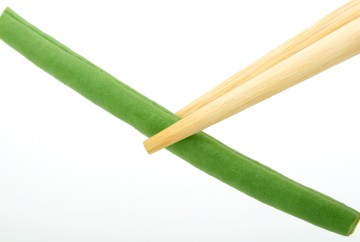
Chinese Chopsticks
In ancient times, chopsticks were called ‘Zhu’. At that time, Chinese ancestors liked to steam or boil food. It was difficult for them to use spoons to dip vegetables in the soup. So they cleverly invented ‘Zhu’ to nip food, thus it has become the most convenient tableware in their lives. Development of chopstick has … Continue reading Chinese Chopsticks

Four Treasures of the Study
Four Treasures of the Study (文房四宝 wén fáng sì bǎo) is an expression used to refer to the ink brush, inkstick, paper and inkstone used in Chinese calligraphy and painting. The name stems from the time of the Southern and Northern Dynasties (420-589 AD). Brushes and ink are two of the legendary “Four Treasures of … Continue reading Four Treasures of the Study
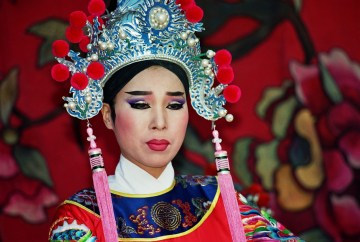
China Beijing Opera
Beijing Opera is the quintessence of China. The largest Chinese opera form, it is extolled as ‘Oriental Opera’. Having a history of 160 years, it has created many ‘firsts’ in Chinese dramas: the abundance of repertoires, the number of artists, opera troupes and spectators. Beijing Opera is developed from absorbing many other dramatic forms, mostly … Continue reading China Beijing Opera
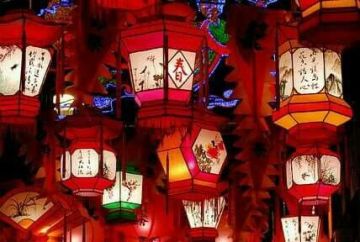
Chinese Lanterns
The most common Chinese lanterns are red, oval shaped, and decorated with red or golden tassels. Typically, they come in many different shapes including square, rectangle, and spherical. When Were Chinese Lanterns Invented? Historians believe that the Chinese first began making the now traditional lanterns during the Eastern Han Dynasty (25–220). Why Were Lanterns Invented? … Continue reading Chinese Lanterns

Chinese Umbrellas
The history of umbrella spans almost across entire span of modern human civilization. Initially created from natural materials such as leaves of eucalyptus and palm trees, advancements in technology enabled creation of first umbrellas. One of the earliest home of umbrella was china, were three thousand years ago first umbrellas started to be made from … Continue reading Chinese Umbrellas

Chinese Ancient Currency
Brief Introduction In ancient China, coins were the main forms of currency. These coins can be made of copper, iron, lead, gold and silver with different shapes, weight and marks. Different from equivalents like draught animals, textiles and shells, ancient coins play an important role in archaeology, that they not only have the reference value … Continue reading Chinese Ancient Currency

Chinese Tea Ceremony
Chinese tea ceremony is quite a different way to drink tea than either traditional English style or Japanese tea ceremony. What follows are some of my notes from the class and the basic steps involved in Chinese tea ceremony. Traditional chinese tea pots are made of unglazed clay, and have been seasoned from years of … Continue reading Chinese Tea Ceremony

Chinese Mahjong
Mahjong (/mɑːˈdʒɒŋ/ mah-JONG, Mandarin: [mǎ.tɕjâŋ]) is a tile-based game that was developed in China during the Qing dynasty and has spread throughout the world since the early 20th century. It is commonly played by four players (with some three-player variations found in South Korea, Japan and Southeast Asia). The game and its regional variants are … Continue reading Chinese Mahjong
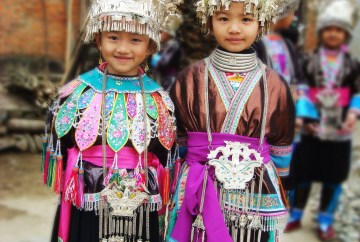
Chinese Ethnic Groups
As a large united multi-national state, China is composed of 56 ethnic groups. Among them Han Chinese account for 91.59% of the overall Chinese population and the other 55 make up the remaining 8.41% according to the Fifth National Population Census of 2000. As the combined population of these other minorities is far fewer than … Continue reading Chinese Ethnic Groups
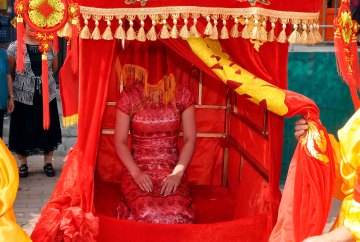
Traditional Chinese Wedding
During a formal Chinese wedding proposal, the groom’s family will present different gifts to announce the engagement, which is usually food and cakes. Both families send “Double Happiness Cakes” to their relatives and friends, along with invitations. The bride’s family provides a dowry list, and the groom’s family performs a “setting bridal bed” ritual. Chinese … Continue reading Traditional Chinese Wedding
 DAVID
DAVID 